
Türkiye, İstanbul
Short-term economic deals between the US and China, albeit limited, may temporarily ease the volatility in the financial markets, but the relief that came to the fore still threatens to have severe and long-term economic pressure on third-party countries.
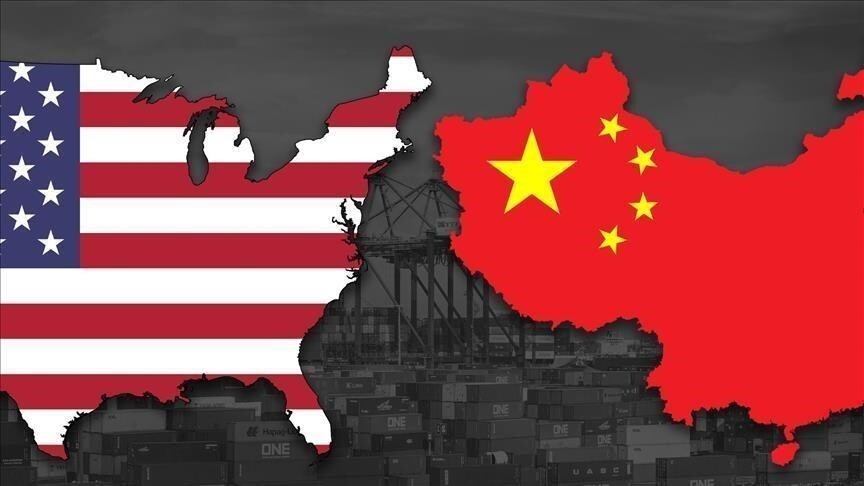
The relationship between the world’s two largest economies irreversibly changed from a trade dispute and evolved into a more multidimensional strategic power struggle amid the ongoing restructuring of supply chains due to the Middle East war, which has yet to see tangible, lasting peace, and the competition over critical raw materials and artificial intelligence (AI).
US President Donald Trump’s recent high-level visit to Beijing marked the first time an American president has set foot on China after Trump’s previous visit in his first term in 2018. The visit was deemed an indicator of controlled systemic competition, a period involving intense rivalry within the global system while avoiding direct conflict.
US-China relations hardened in recent years amid trade wars, tech restrictions, and the Taiwan question, as well as the current energy security crises, alongside global security crises.
The limited deals reached during Trump’s visit with his delegation of American tech leaders to negotiate the opening up of China to the Western tech world through payment systems and such may reduce risk perception in global markets, but serious pressures could still emerge.
Arzu Al, a professor of international political economy at Marmara University, stated that energy has replaced simple industrial manufacturing in generating geopolitical power, and since China is the world’s largest energy importer, the country secures a massive cost advantage by buying discounted oil from sanctioned Iran, Russia, and Venezuela.
“Beijing is lowering production costs and gaining a competitive edge through this method, and from Washington’s point of view, the issue is more than the energy market, as its goal has more to do with slowing down China’s long-term economic rise,” she said.
Tensions in critical energy corridors, such as the Strait of Hormuz, have rendered the energy security aspect of the competition more visible, while Washington’s moves to expand sanctions on Iran and restrictions on accessing Venezuelan oil alongside increased pressure on maritime shipping could be efforts to disrupt China’s alternative energy networks.
“Even if Beijing felt the pressure in the short term, it’s aiming to balance it in the long term through strategic oil reserves, renewable energy investments, and non-dollar payment systems,” she said. “The emerging scenario points to a larger process transcending classic sanction mechanisms.”
Al stated that US-China relations have evolved into a structural systemic competition involving tech, energy, finance, and supply chains, eroding the multilateral trade order that emerged after the Second World War.
She noted that China managed to maintain its footing in global export capacity by shifting production to ASEAN countries, Mexico, and other third countries while US imports from China decreased, pointing to a new structure of “trade diversion.”
“This process makes global production networks more complex and increases shipping costs and geopolitical risks,” she said, noting that the World Trade Organization’s rules-based system weakened as countries now deem economic relations from a national security perspective rather than the free market perspective with the emergence of friend-shoring, de-risking, and tech embargoes.
“In the short term, these limited deals between the US and China could ease risk perception and provide some temporary relief to financial markets, but it is likely that there will be some serious pressures emerging on third-party economies in the medium and long term,” she said.
Al stated that the greatest risk the EU is facing from China is its excess industrial production capacity moving towards European markets with cost-effective electric vehicles (EVs), solar panels, and green tech products.
“The China Plus One enables countries like India, Vietnam, Indonesia, Mexico, and Brazil to attract new investments, but they’re being forced to choose between the two blocs under the US-China competition pressure,” she said.
“The Global South is facing both economic opportunities and the risk of secondary sanctions and this is leading the world economy away from single-polar globalization and to a new economic order that’s more fragmented, bloc-based, and shaped by geopolitical risks,” she added.
