
BERLIN
- Okba Shech Ahmad from logistics company Roland says clients are increasingly interested in moving freight via Türkiye and Syria, either overland or through combined sea-and-land solutions
- ‘It may take longer and be more expensive at the moment, but it’s working,’ Ahmad says
German exporters trying to reach Gulf markets are looking beyond the sea routes they have relied on for decades, as disruptions from the Iran war continue driving up freight and insurance costs.
Hans-Ulrich Dicke, a projects manager at logistics company Derda, said the latest developments have spurred interest in transporting goods through Syria.
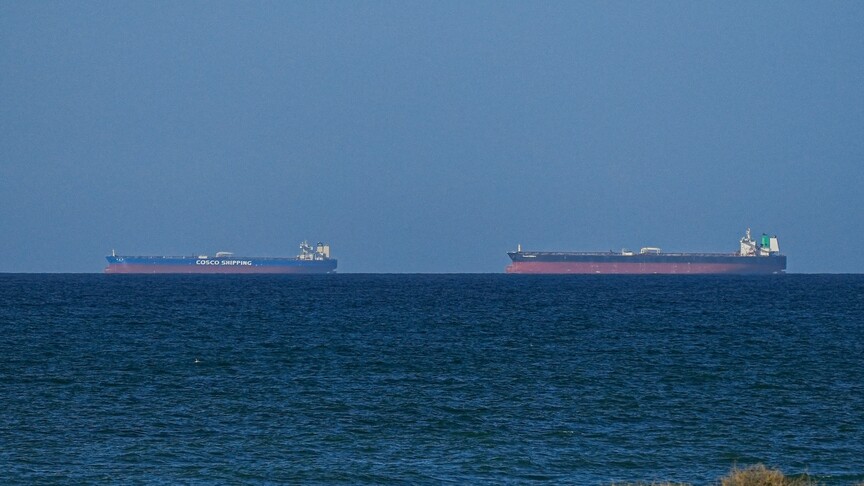
“Iran war is, of course, hampering all business with the Middle East. The container ships cannot cross the Strait of Hormuz anymore, so we’re seeking alternative solutions on a daily basis,” he told Anadolu.
When the conflict started, Dicke said, logistics companies pivoted to the Port of Fujairah on the eastern coast of the UAE as an alternative to avoid the Strait of Hormuz. However, he noted that Fujairah is getting more and more congested.
We then tried the Jeddah option, but it was not viable as it cost four times more, he said.
Air cargo was also not the preferred option for many German exporters, forcing logistics firms to look for emergency solutions, he said.
Now we are looking to move goods through Syria to the Gulf countries, he added.
High value destination
The Gulf is a high-value destination for German exporters for machinery, auto and chemicals. It also serves as a key hub for reaching customers across the wider Middle East.
German exports to the six Gulf Cooperation Council states — the UAE, Saudi Arabia, Qatar, Kuwait, Oman and Bahrain — totaled about €25 billion ($29 billion) in 2025.
Disruption in the Strait of Hormuz risk losses running into billions of euros.
Dicke said the ongoing conflict has hit German companies, particularly those exporting nondurable goods such as medicine supplies and food and beverage.
It has also made pre-planning difficult for firms producing machinery or similar products.
“So the longer this blockade takes, the more dangerous it gets because the companies invest and they cannot sell the goods in the end. And this, of course, is a huge problem,” he said.
“If this war keeps on for a longer time, this will have a catastrophic influence on all of us,” he warned.
Alternative route via Türkiye, Syria
Okba Shech Ahmad, business development manager at logistics company Roland, said they are receiving a growing number of calls from German exporters seeking alternative routes to the Middle East and Gulf, with many increasingly shifting shipments via Türkiye and Syria.
“More than 50% of companies are directly affected by the current conflict,” he said, adding that they monitor developments in the Iran war and the blockade of the Strait of Hormuz daily.
“We are developing of course new, alternative solutions, from Germany to Arab countries, through Syria for example,” he told Anadolu.
The location of Syria is “very strategic” but without Türkiye it will not work, he said.
Ahmad said they have shifted some of their logistics operations to overland transportation via Türkiye and Syria, then on to Jordan, Saudi Arabia, and other destinations in the region.
Another route they are using combines sea and land freight; from European ports to Türkiye’s Mersin port, and from there onward by land via Syria.
Ahmad said overland transport from Germany to Saudi Arabia takes at least three weeks, while a combined sea-and-land route takes about 35 days.
“Our clients are pleased with these solutions, they want to move forward with these options,” he said.
“It may take longer and be more expensive at the moment, but it’s working. It’s the (only) possible solution right now.”
