
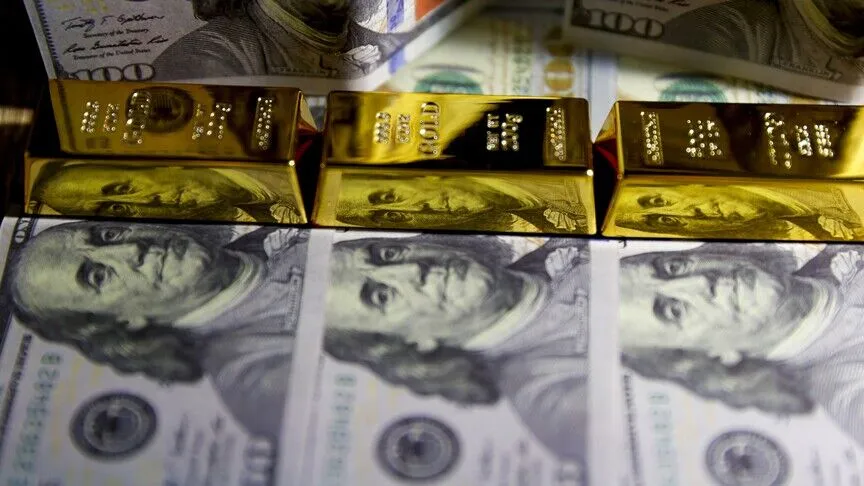
Gold started the year positive and saw record highs of $5,598 per ounce in the first quarter, but it dropped 28.4% from that level in the second quarter to $4,007 due to the widespread effect of the US-Israel-Iran war in the first half of the year.
Gold started the year high but the joint US and Israeli attacks against Iran on Feb. 28 and Tehran’s subsequent retaliations escalated regional tensions in the Middle East. Gold started the year at $4,313 per ounce but fell 7.1% during the first six months of the year.
Concerns that interest rates could remain high for longer, the strengthening US dollar, and diminishing doubts over the Fed’s independence drove gold below $4,000 per ounce on June 24 for the first time since November 2025.
From the end of February, when the war broke out, through the end of March when hostilities intensified, oil surged amid rising geopolitical risks in the Strait of Hormuz, with Brent crude reaching as high as $114 per barrel.
The rapid rise in oil was feared would reignite global inflation, which in turn could pressure economic growth. The inflation risks drove monetary policy expectations among major central banks.
The Fed was previously expected to cut rates twice by year-end before the war, but following the outbreak, the bank is now expected to hike rates at least once by the end of the year. Markets also expect the Fed could hike rates once more by the end of 2027.
The change in leadership at the Fed also drove these estimates, as the current chair Kevin Warsh, known for his hawkish stance, emphasized price stability as a priority in his initial remarks, which means tightening monetary policy if necessary.
Warsh’s commitment to fighting inflation eased concerns about the Fed’s independence, as previously dominant dovish expectations gave way to hawkish expectations that monetary policy would remain tight for a longer period.
The US dollar gained strength against other currencies amid these developments, as the currency’s index maintained a trajectory around the 100 threshold.
As greenbacks strengthened and rate hike estimates intensified, the opportunity cost of holding gold rose, adding downward pressure on the precious metal’s ounce price.
Gold, having trended downward in the first half, is expected to find direction in the second half of the year as a result of major banks’ monetary policy steps depending on the inflation outlook.
Whether lasting peace can be established in the Middle East and whether global trade can remain uninterrupted are also among the key factors influencing gold prices.
Ole Hansen, head of commodity research at Saxo Capital, told Anadolu that the decline in gold during the first half was due to a combination of macroeconomic and technical factors, as market positioning had become increasingly concentrated after its strong rally to record levels.
“The main catalyst was the energy-driven inflation shock linked to developments in the Middle East, which pushed oil prices sharply higher and revived expectations that the US Federal Reserve would keep interest rates higher for longer,” he said. “That lifted US bond yields and strengthened the dollar, increasing the opportunity cost of holding a non-yielding asset such as gold.”
Hansen stated that price gained corrective momentum by dipping below several key technical support levels, triggering additional liquidation of long positions among both momentum and algorithmic traders.
“Reduced safe-haven demand, as markets gradually reassessed geopolitical risks, together with continued strength in global equity markets, also encouraged investors to rotate away from defensive assets,” he noted. “Overall, the decline was primarily driven by higher funding-cost expectations, a stronger dollar, technical selling and position adjustment following an extended rally.”
He mentioned that gold could continue to be sensitive to the US dollar’s movements, as well as to the Treasury yields and the Fed’s monetary policy in the second half.
Hansen emphasized that the upward momentum in gold prices may remain limited so long as real yields stay high, and the dollar maintains strength.
“However, we believe the backdrop could gradually become more supportive during the second half of the year. The sharp correction has already removed a significant amount of speculative positioning, reducing the risk of further large-scale long liquidation. At the same time, lower energy prices may ease inflation pressures, potentially allowing the Federal Reserve to adopt a less hawkish tone if incoming economic data continue to soften,” he said.
He stated that other long-term structural factors apart from monetary policy will be decisive in gold prices, such as central bank purchases remaining a source of demand, but geopolitical uncertainties have yet to be fully diminished.
“Concerns about fiscal sustainability and reserve diversification are likely to remain supportive of strategic gold allocations,” he added.
*Writing by Emir Yildirim
