
İSTANBUL
Global markets are trading on a negative trend due to expectations that the Fed will hike rates and that geopolitical tensions in the Middle East will further escalate, while bond markets come under selling pressure once again.
Brent crude oil prices have been pushed back above the $90-a-barrel level due to growing supply concerns amid renewed US-Iran military clashes, as investors pull back from risky assets.
Bond yields are expected to rise and stock markets to fall as geopolitical risks intensify and drive up oil prices.
Growing concerns over inflationary pressures contribute to hawkish expectations from the Fed, as markets price in an October rate hike by the central bank with high certainty.
If US nonfarm payrolls data comes in strong on Friday, rate hike expectations could further intensify.
US President Donald Trump said Washington will retaliate against Iran after Tehran targeted American air bases in Jordan with ballistic missiles.
Concerns that new conflicts in the region could lead to prolonged energy flow disruptions in the Strait of Hormuz drove up December-delivery Brent crude oil to $91.5 a barrel, marking a 3.6% jump on Tuesday.
Meanwhile, Russia’s decision to extend its diesel export ban through Sept. 30 also contributed to concerns over refined fuel supplies.
Additionally, US Treasury Secretary Scott Bessent said economic growth is the top priority for the G20 at the latest Finance Ministers and Central Bank Governors Meeting in Washington, DC.
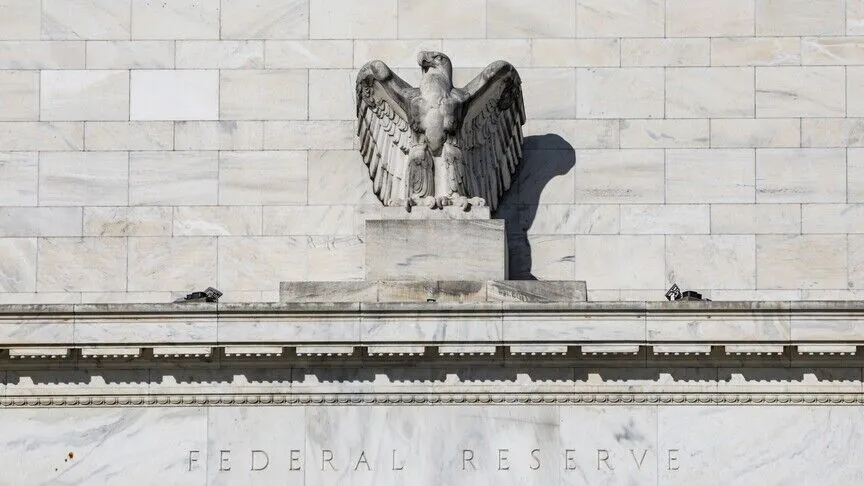
Fed Chair Kevin Warsh said economic growth in the US seems to have strengthened and that the bank would address questions over capital expenditures and productivity at the meeting. He noted the Fed will continue to remain focused on reform in the US.
The US 10-year Treasury yield reached its highest level since January 2025 at 4.79% amid inflationary concerns due to rising oil prices and hawkish expectations.
The US dollar rose 0.1% to 99.5 and gold dropped 0.5% to $4,430 per ounce.
The New York Stock Exchange closed Monday with losses as the Dow Jones Industrial Average fell 0.7%, the S&P 500 dropped 0.33%, and the Nasdaq was down 0.12%. American indexes started Tuesday on a mixed trend.
Meanwhile, European stock markets also traded lower on Monday as bond markets came under selling pressure and geopolitical tensions heightened, fueling inflation concerns.
Germany’s 10-year bond yield rose to its highest level in 15 years at 3.32% due to the rise of the political far right in the country.
Trading was suspended on the London Stock Exchange due to a public holiday, while rising financing costs across the continent fueled selling pressure, especially on real estate and tech stocks.
Germany’s consumer price index rose 0.2% month-on-month and 2.9% on an annual basis in August, slightly above expectations.
France’s CAC 40 fell 0.79%, Germany’s DAX 40 dropped 1.17%, and Italy’s FTSE MIB 30 was down 0.01% on Monday. European indexes opened Tuesday in the red.
At the same time, Asian equity markets came under heavy selling due to rising geopolitical risks and higher oil prices.
Japan’s 10-year bond yield reached 3% for the first time since 1996 following reports that Bessent urged the Bank of Japan to hike rates more aggressively.
China’s RatingDog manufacturing Purchasing Managers’ Index rose from 50.9 to 51.5 in August, indicating that demand in the country’s manufacturing sector remained, while issues in domestic demand and sector and cost pressures due to geopolitical risks continued.
South Korea’s exports surged 68.7% on an annual basis in August, above estimates, showing that global demand, especially for tech products, remains strong.
Near Tuesday’s close, South Korea’s Kospi fell 0.1%, Japan’s Nikkei dropped 0.1%, and Hong Kong’s Hang Seng was down 1%, while China’s Shanghai Composite traded flat.
