ISTANBUL
Türkiye on Tuesday marks the 88th anniversary of the death of its founding father, the Great Leader, Gazi Mustafa Kemal Ataturk, who led the National Struggle, secured Anatolia as the Turkish homeland and established the Republic of Türkiye, which celebrated its 103rd anniversary last month.
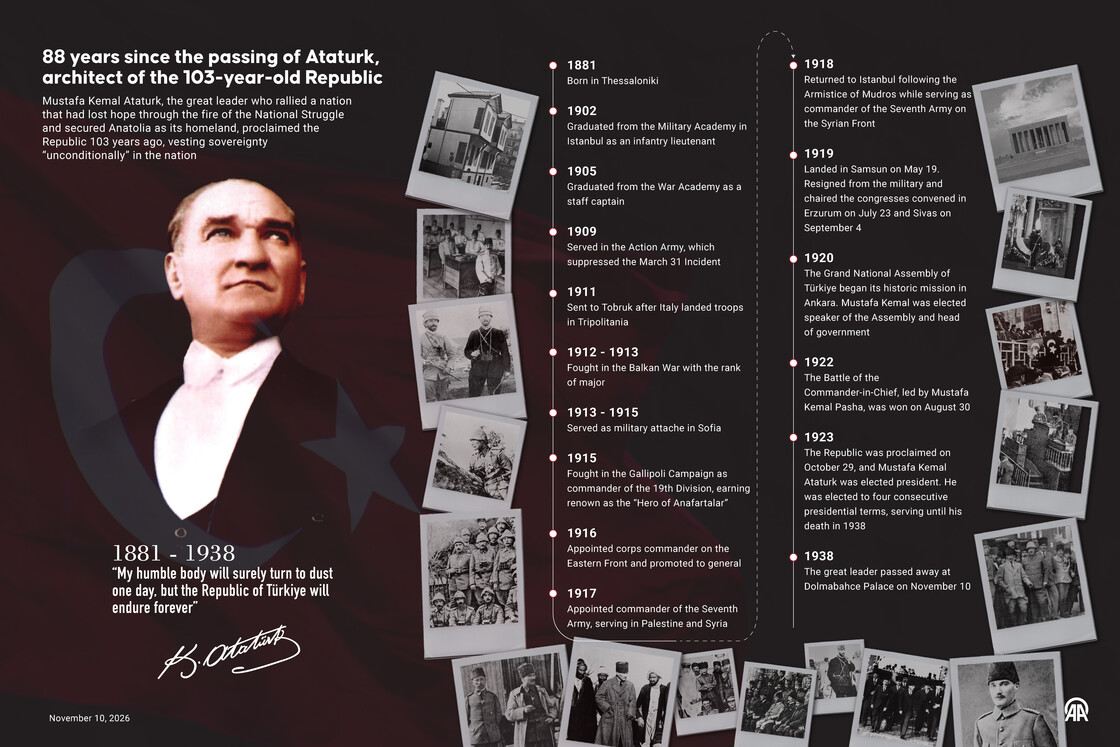
Ataturk was born in Thessaloniki in 1881.
At the request of his mother, Zubeyde Hanim, Mustafa Kemal began his primary education at Hafiz Mehmet Efendi’s neighborhood school. He later transferred to Semsi Efendi School at the insistence of his father, Ali Riza Efendi, completing his elementary education there.
After initially enrolling at Thessaloniki Civil Junior High School, he left of his own accord to continue his studies at Thessaloniki Military Junior High School.
He subsequently graduated second in his class from Manastir Military High School.
Alongside his military education, Mustafa Kemal studied foreign languages, taking French lessons during summer holidays in Thessaloniki.
He moved to Istanbul in 1899 to attend the Military Academy, graduating in 1902 with the rank of second lieutenant.
In 1905, he completed the Military Staff College, graduating as a staff captain.
That same year, Mustafa Kemal was assigned to the Fifth Army Command in Damascus for staff officer training.
His distinguished service in the Syrian region earned him the Fifth Class Order of the Medjidie.
In 1907, he was assigned to the headquarters of the Third Army in Manastir, Macedonia, before serving in its staff department in Thessaloniki.
While stationed in Manastir and Thessaloniki, Mustafa Kemal participated in the Action Army, which suppressed the March 31 Incident in Istanbul in 1909.
He also took part in a military operation to suppress an uprising in Albania in 1910.
Following Italy’s landing of troops in Tripolitania in 1911, Mustafa Kemal was dispatched to Tobruk, where he commanded Turkish forces in Tobruk and Derna and secured a victory against Italian troops in the Battle of Tobruk.
Appointed commander of Derna on March 6, 1912, he later joined the Balkan Wars, which broke out that October, serving with units in Gallipoli and Bolayir.
He played a significant role in the recapture of Dimetoka and Edirne.
‘There can be no duty greater or more sacred than the defense of the homeland’
Following the Balkan Wars, Mustafa Kemal was appointed military attache in Sofia in 1913.
When World War I broke out, he requested an active frontline assignment from the Deputy Commander-in-Chief.
“There is always a position for you in the army. However, we consider your military attaché position in Sofia more important, so we are keeping you there,” he was told.
Mustafa Kemal responded in a letter to Deputy Commander-in-Chief Enver Pasha:
“There can be no duty more important or more sacred than actively serving in the defense of the homeland. While my friends are on the battlefronts, in the firing lines, I cannot remain in Sofia as a military attaché. If I lack the qualifications to be an officer of the first rank, if that is your opinion, please tell me so openly.”
Following the exchange, he was appointed commander of the 19th Division in 1915, which was to be formed in Tekirdag under the Third Corps commanded by Esat Pasha.
Enemy forces that had landed on the Gelibolu Peninsula and advanced toward Conkbayiri were forced to retreat after an attack by the 19th Division under Mustafa Kemal’s command.
When Turkish troops ran out of ammunition, he rallied them with the words: “If you have no ammunition, you still have your bayonets.”
During the fighting at Conkbayiri, shrapnel struck Mustafa Kemal in the chest, but a pocket watch he was carrying absorbed the impact, saving his life.
His leadership proved decisive not only in the northern battles of the Gallipoli Peninsula but also in the broader Dardanelles campaign and the defense of Istanbul.
His achievements during the Canakkale Campaign earned him the title “Hero of Anafartalar.”
Following the campaign, Mustafa Kemal was appointed commander of the 16th Corps on the Eastern Front.
In 1916, he halted Russian advances and recaptured Bitlis and Mus, earning a promotion to general.
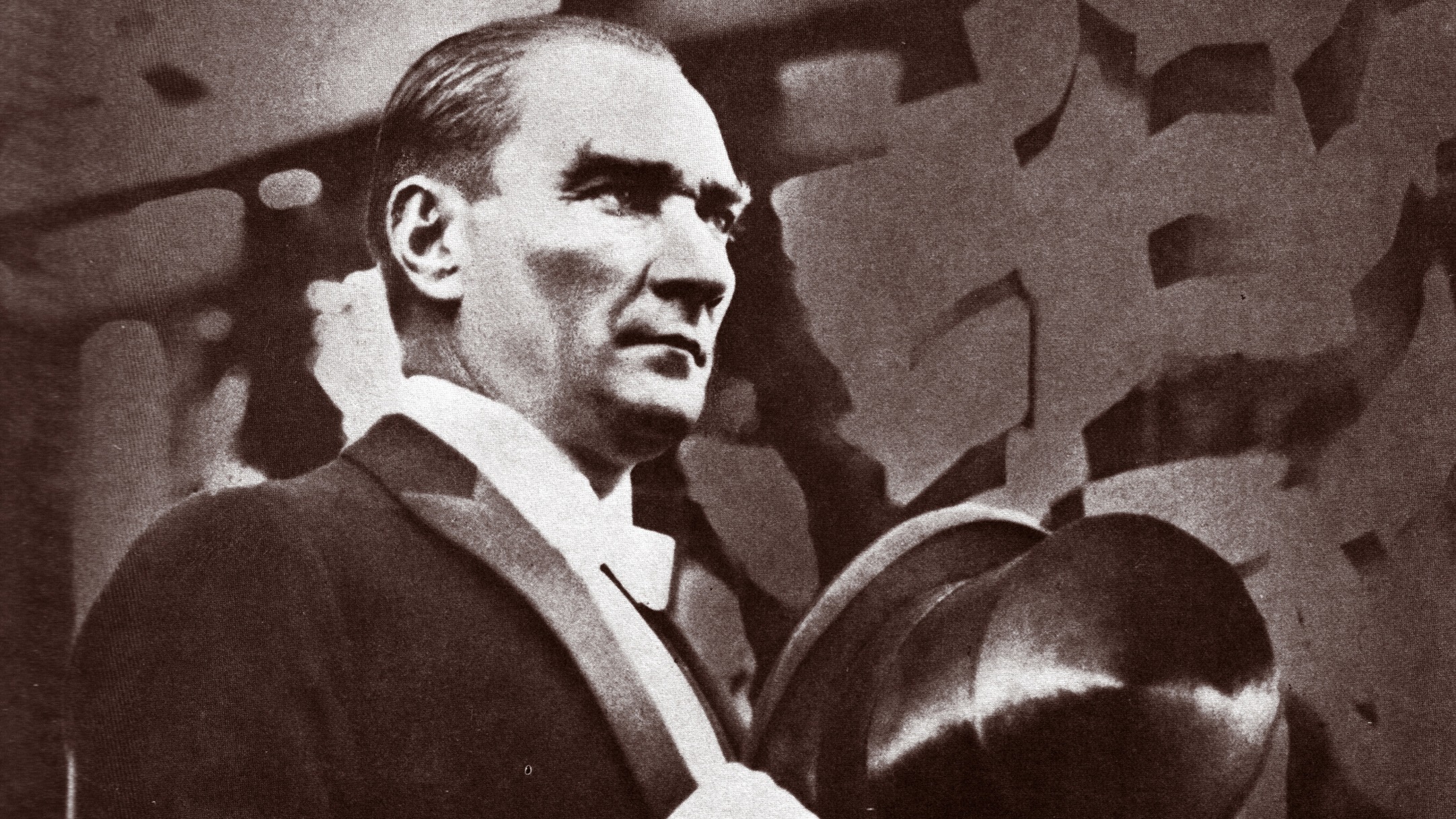
He set out for Samsun following the occupation of the country
In July 1917, Mustafa Kemal Pasha was appointed commander of the Seventh Army, serving in Palestine and Syria.
Although subsequently assigned to command the Second Army, he declined the appointment and remained in Istanbul under General Headquarters.
That year, he accompanied Crown Prince Vahdettin to Germany, where he inspected the German General Staff and military fronts.
In 1918, Mustafa Kemal returned to the Syrian Front as commander of the Seventh Army.
He warned Istanbul that British forces intended to occupy Iskenderun and encircle the Seventh Army as it withdrew northward.
When British troops took control of Iskenderun without resistance on Nov. 9, 1918, Mustafa Kemal criticized the concessions made to Britain in telegrams exchanged with the Ottoman government.
He warned that continuing such policies would expose the country to further foreign interference and occupation.
He was subsequently informed that the Yildirim Army Group Command and the Seventh Army had been disbanded.
Determined to end the country’s state of helplessness, Mustafa Kemal handed command of his troops to Nihat Pasha, commander of the Second Army, and departed Adana for Istanbul by train that evening.
He remained in Istanbul from Nov. 13, 1918, until May 16, 1919, discussing the country’s situation with close associates.
He then embarked on a journey to Samsun that would mark the beginning of the struggle for national independence.
Concealing his objective of liberating the country from foreign occupation, Mustafa Kemal left Istanbul under his official appointment as inspector of the Ninth Army.
He arrived in Samsun on May 19, 1919, and issued the Amasya Circular on June 22.
The circular warned that the homeland’s territorial integrity and the nation’s independence were under threat and announced plans for a congress in Sivas to organize the national resistance.
Mustafa Kemal subsequently resigned from his military post and official duties under the Ottoman government.
He chaired the Erzurum Congress on July 23, 1919, and the Sivas Congress on Sept. 4.
The congresses adopted decisions to defend the homeland against foreign occupation, establish a provisional government, convene a national assembly and reject foreign mandates or protection.
These decisions laid the groundwork for the future Grand National Assembly of Türkiye.
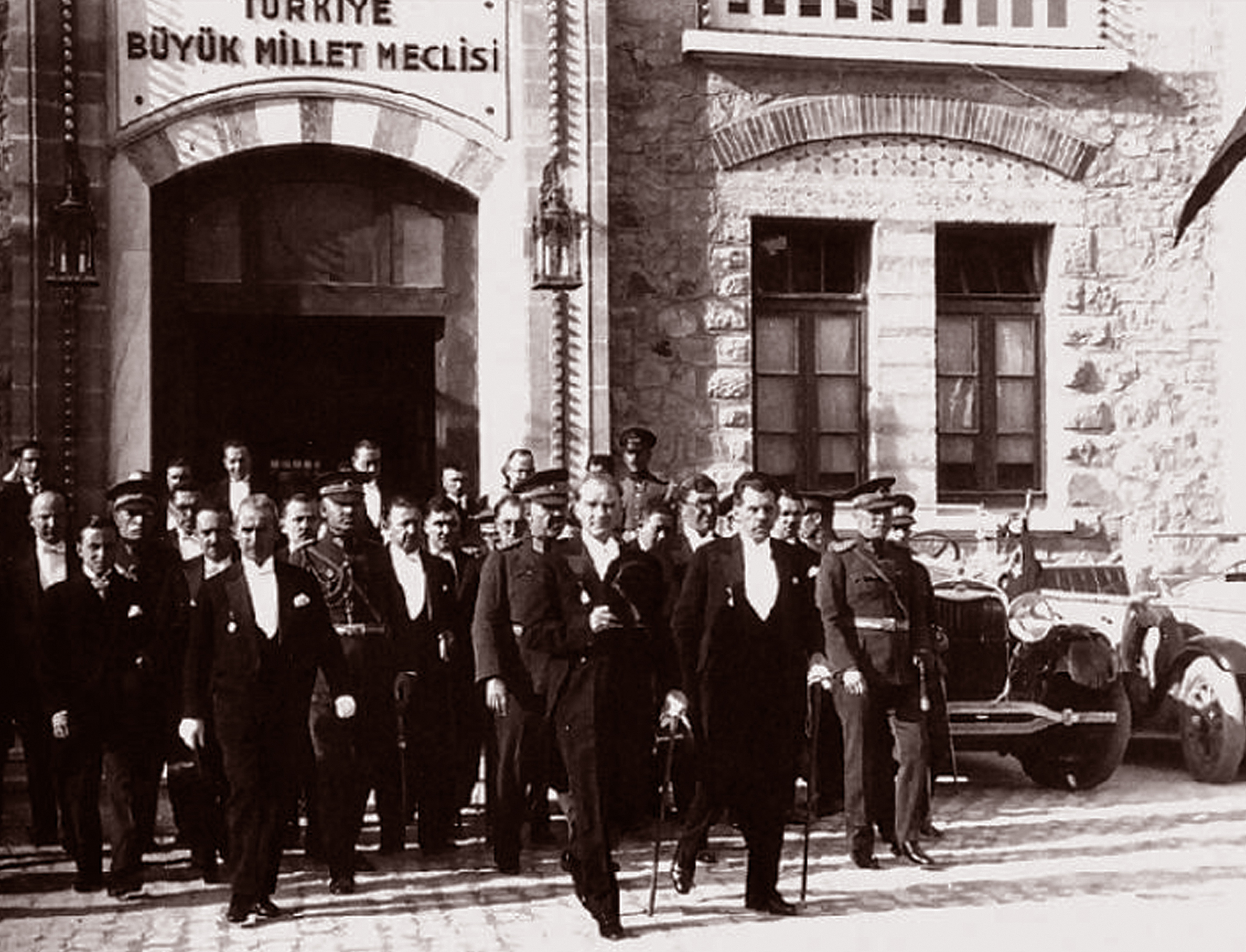
The Turkish parliament began its historic work in Ankara on April 23, 1920, under Mustafa Kemal’s leadership.
He was elected president of the assembly.
He founded Anadolu Agency, witness to the National Struggle and War of Independence
Seventeen days before parliament convened, Anadolu Agency was established on April 6, 1920, on Mustafa Kemal Ataturk’s instructions.
Founded to “make the voice of the National Struggle heard by the world,” the agency reported the first laws enacted by the Turkish parliament and witnessed every stage of the National Struggle and War of Independence.
Despite the establishment of a national government and parliament, the Ottoman government and Allied Powers signed the Treaty of Sevres on Aug. 10, 1920.
‘The Treaty of Sevres does not exist for us’
In an interview with a correspondent from the United Telegraph newspaper, Ataturk emphasized that the national movement did not recognize the treaty.
“The Treaty of Sevres, which was designed to destroy our political, judicial, economic and financial independence and ultimately deny and eliminate our right to exist, does not exist for us.”
The Turkish parliament publicly rejected the agreement signed between the Ottoman government and the Allied Powers.
‘Not a single inch of the homeland can be abandoned unless it has been soaked with the blood of its citizens’
The advance of Greek forces, which had occupied Izmir with Allied support, was halted in the First and Second Battles of Inonu in 1921.
A renewed Greek offensive on Aug. 23, 1921, marked the beginning of the Battle of Sakarya.
Mustafa Kemal issued his historic order to the troops:
“There is no line of defense, there is a surface of defense. That surface is the entire homeland. Not a single inch of the homeland can be abandoned unless it has been soaked with the blood of its citizens.”
Rank of ‘Field Marshal’ and title of ‘Gazi’
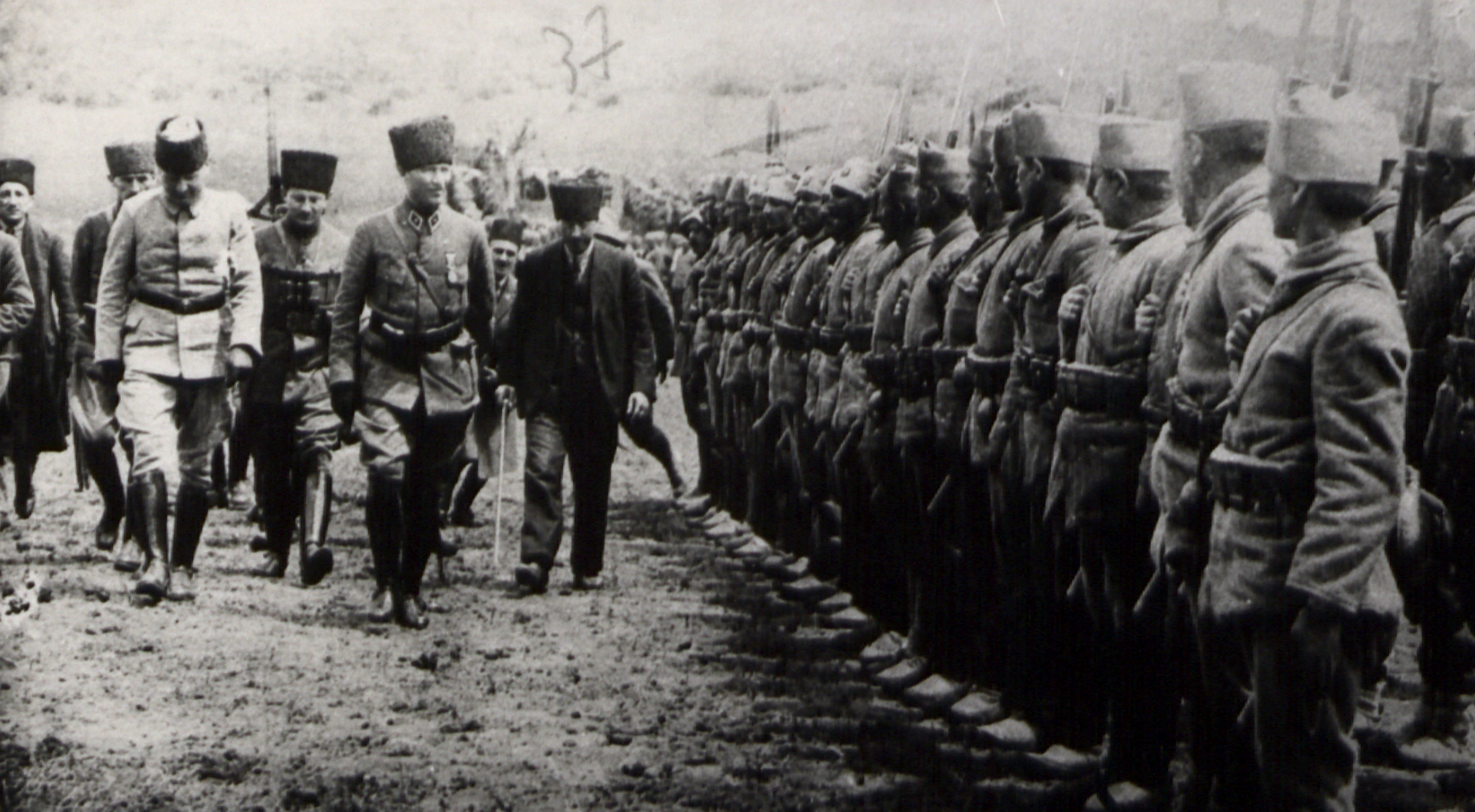
Under Commander-in-Chief Mustafa Kemal Pasha, the Turkish army defeated Greek forces in the Battle of Sakarya.
The 22-day battle inflicted heavy losses on the Greek army.
In recognition of the victory, the Grand National Assembly awarded Mustafa Kemal Ataturk the rank of field marshal and the title of Gazi, meaning veteran.
Following the victory, the Treaty of Kars was signed with the Caucasian republics on Oct. 13, 1921, followed by the Ankara Agreement with France on Oct. 20, helping establish Türkiye’s present-day borders, apart from Hatay.
On Aug. 26, 1922, the Turkish army launched the Great Offensive under Ataturk’s command to liberate the homeland from foreign occupation.
The offensive culminated in a decisive victory over Greek forces at the Battle of Dumlupinar, also known as the Battle of the Commander-in-Chief, on Aug. 30.
Pursuing retreating Greek troops, the Turkish army entered Izmir on Sept. 9, 1922.
The military victories paved the way for the Armistice of Mudanya, signed on Oct. 11, 1922.
Allied forces subsequently withdrew from the Turkish territories they had occupied.
The War of Independence became a defining chapter in the country’s history, demonstrating the Turkish nation’s determination and reshaping its future.
Treaty of Lausanne, Türkiye’s document of independence, was signed
On July 24, 1923, the Treaty of Lausanne was signed by a Turkish delegation headed by Ismet Inonu and representatives of Britain, France, Italy, Japan, Greece, Romania and Yugoslavia.
“This treaty is a document expressing the collapse of a great conspiracy that had been prepared against the Turkish nation for centuries and was believed to have been completed with the Treaty of Sevres,” the Great leader stated.
First president of the Republic of Türkiye
Ataturk studied the republican system established after the French Revolution, including its democratic principles and institutions.
However, he believed the French model could not simply be replicated in Türkiye.
Drawing on his understanding of the country’s political, social and economic conditions, he envisioned a republic capable of extending democratic governance across society.
Journalist and writer Falih Rifki Atay, a close associate of Ataturk, recounted the events leading to the proclamation of the Republic in his book Cankaya.
According to Atay, the extraordinary political circumstances of the period required a clear constitutional definition of Türkiye’s form of government, particularly as supporters of the sultanate and caliphate remained influential.
Ataturk initially kept his plans to proclaim a republic private, concerned that an early announcement could provoke opposition.
Instead, he worked to create the conditions for the new system to gain broad acceptance.
In his book Nutuk (The Speech), he explained his approach:
“Without mentioning the Republic, we were trying to organize the administration of the state in accordance with the principles of national sovereignty, in such a way that it was moving toward the Republic at every moment.”
The Republic was proclaimed by the Turkish parliament on Oct. 29, 1923, and Mustafa Kemal Ataturk became its first president.
The Great Leader was elected president four consecutive times before his death in 1938, becoming the longest-serving president in the country’s history.
An assassination attempt against Ataturk was foiled on June 14, 1926, and those responsible were arrested in Izmir.
Commenting on the plot in a statement to Anadolu, he said:
“There can be no doubt that this vile attempt was directed not so much against my person as against our sacred Republic and the high principles upon which it is founded. My humble body will certainly one day turn to dust, but the Republic of Türkiye will endure forever,”
On Nov. 24, 1934, Law No. 2587 granted Mustafa Kemal the surname Ataturk and prohibited its use by anyone else.
Achievements in economy, foreign policy and agriculture
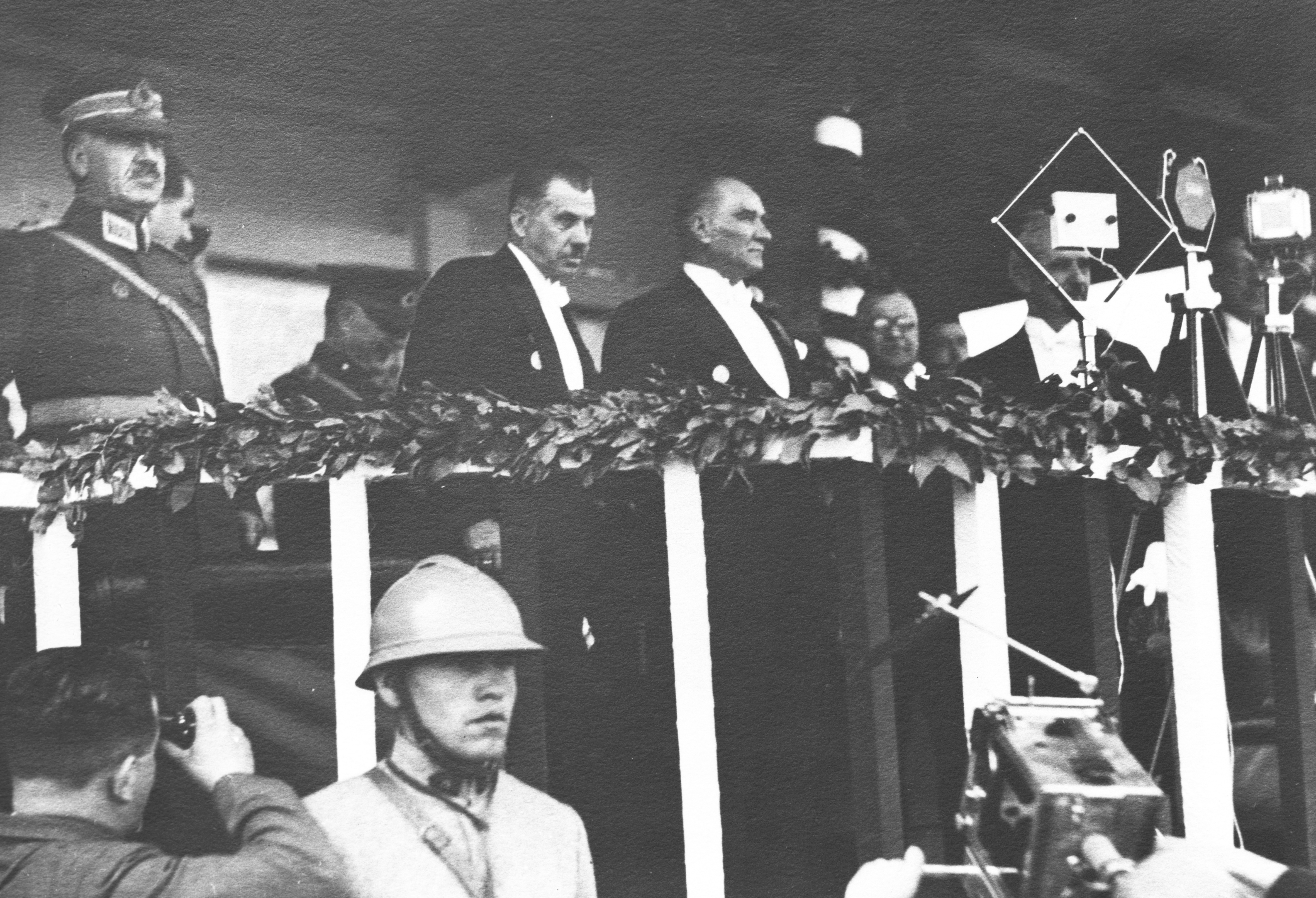
In 1933, Ataturk launched the Five-Year Industrial Plan to mitigate the effects of the 1929 Great Depression and accelerate Türkiye’s economic development.
His presidency also saw major foreign policy achievements, including Türkiye’s admission to the League of Nations, the signing of the Balkan Pact, the Montreux Convention Regarding the Regime of the Straits and the Saadabad Pact.
These initiatives helped strengthen Türkiye’s diplomatic standing and regional influence.
Ataturk also prioritized agriculture and rural development.
Beginning in 1925, he oversaw systematic agricultural initiatives on farms over 13 years, transforming previously unproductive land into arable farmland.
‘Hatay is my personal cause’
Ataturk devoted considerable effort to securing Hatay’s incorporation into Türkiye, describing the territory as “my personal cause.”
The objective was achieved in 1939, after his death.
Throughout his 57 years, Mustafa Kemal Ataturk devoted himself to the independence of his nation and homeland, leaving a lasting legacy through his military and political leadership.
Respected for his military and political genius, Mustafa Kemal Ataturk passed away at Dolmabahce Palace in Istanbul on November 10, 1938, at the age of 57, at 9:05 a.m.
His death prompted widespread mourning in Türkiye and abroad.
Ataturk’s final journey to Anitkabir
On Nov. 16, 1938, Ataturk’s remains were placed in state in the ceremonial hall of Dolmabahce Palace.
Three days later, his coffin was carried in a procession to the battleship Yavuz, which transported it to Izmit.
That evening, his remains were transferred to a train bound for Ankara, the same means of transport he had frequently used during his travels across the country.
On Nov. 20, the coffin was received in Ankara by state officials and foreign representatives before being placed in state outside the Turkish parliament.
Following a grand state funeral, Ataturk was temporarily laid to rest at the Ankara Ethnography Museum on Nov. 21, 1938.
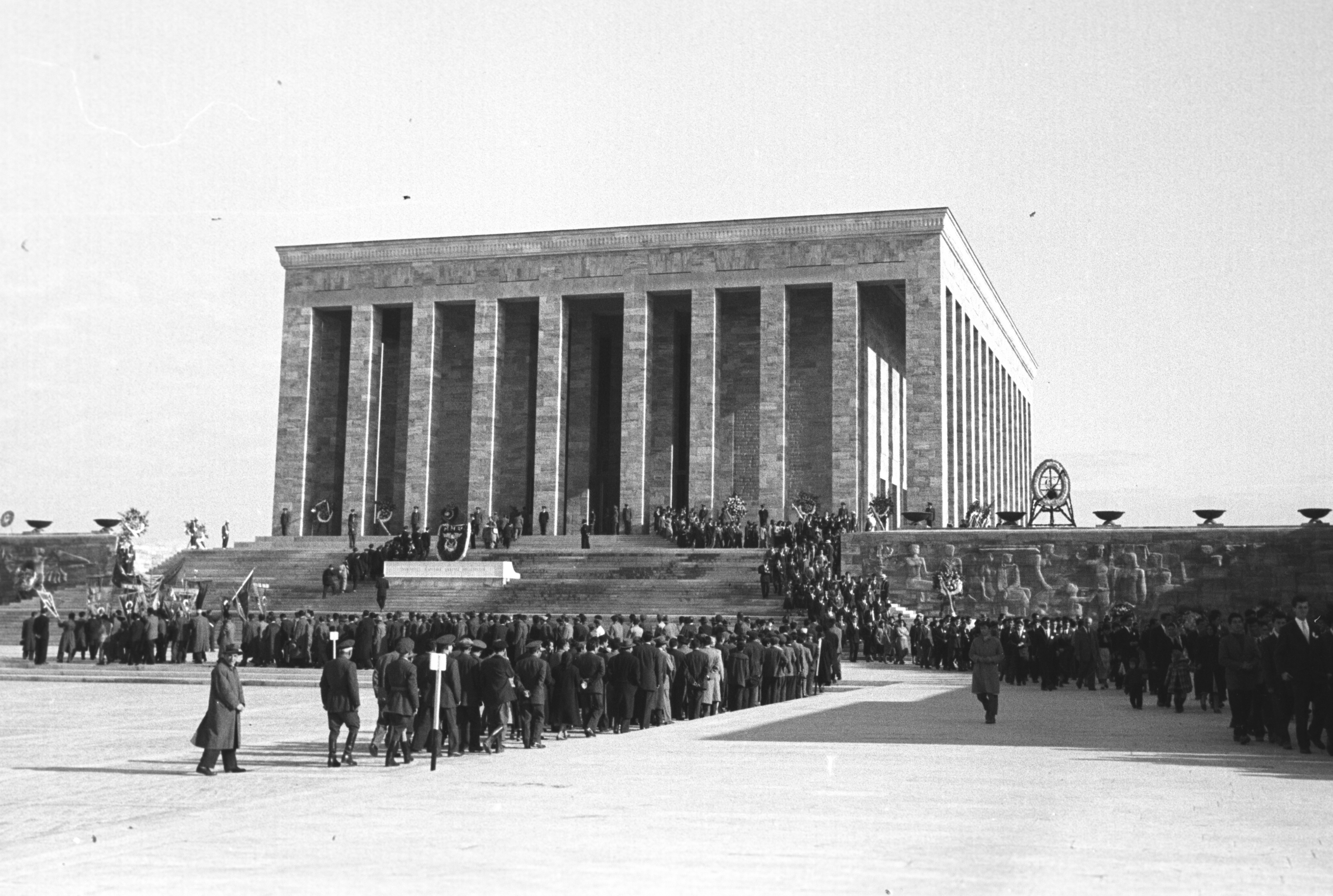
His remains stayed there until Nov. 10, 1953, when they were transferred to Anitkabir, his permanent resting place.
“My humble body will certainly one day turn to dust, but the Republic of Türkiye will endure forever,” Ataturk once said.
Eighty-eight years after his death, Gazi Mustafa Kemal Ataturk’s legacy continues to hold a central place in the hearts of the Turkish nation, with Anitkabir standing as an enduring symbol of his memory in the heart of Türkiye.