
WASHINGTON/ISTANBUL
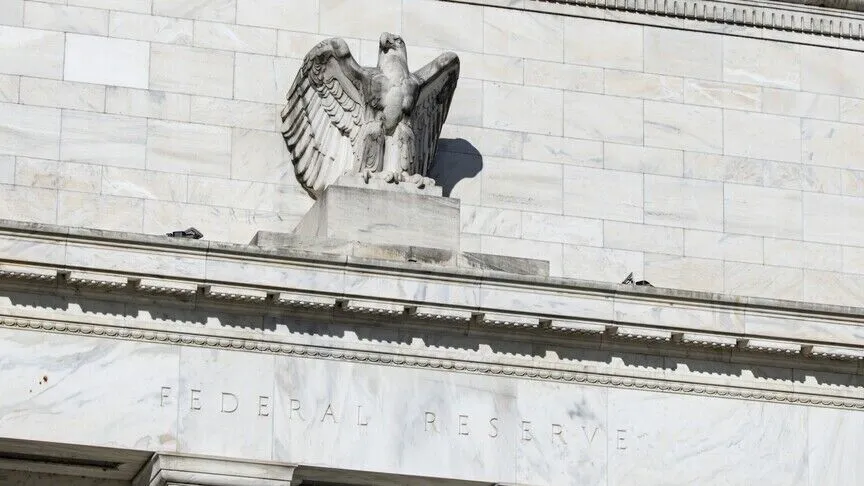
Slowing annual inflation in the US in June reduced pressure for an interest rate hike at the Federal Reserve’s meeting next week, while Middle East tensions increased policy uncertainty.
The Federal Open Market Committee will hold the meeting on July 28 – 29; recent data indicated easing inflationary pressures, but the renewed escalation of tensions in the Middle East and rising oil prices brought energy costs back to the forefront as a major risk factor.
Markets widely expect the Fed to keep its policy rate steady at next week’s meeting, but they did not rule out a rate hike because of rising energy prices and inflation remaining above target.
Markets priced in a 64.2% probability that the Fed would keep the policy rate unchanged in the 3.5%-3.75% range, and a 35.8% probability of a rate hike, according to CME Group data.
Statements by new Fed Chair Kevin Warsh emphasizing his commitment to restoring price stability after taking office, while providing limited forward guidance, also increased uncertainty.
Annual inflation slowed in June with a drop in energy costs
Recent economic data released in the US were among the main factors supporting expectations that the Fed would keep rates steady.
The Consumer Price Index fell 0.4% on a monthly basis in June, while it rose 3.5% annually, coming in below expectations, according to US Labor Department data.
The index recorded its first monthly decline since May 2020.
Energy costs dropped 5.7% in June after rising by 10.9% in March, 3.8% in April and 3.9% in May.
The decline in the energy index offset price increases of other items, including shelter and food, and became one of the main drivers of the monthly decline in the index.
The energy index surged 15.7% year-on-year in June despite the monthly drop in energy prices.
The core index, excluding volatile energy and food prices, remained flat on a monthly basis in June, while it increased 2.6% annually.
The Producer Price Index also declined 0.3% on a monthly basis, while it rose 5.5% annually, staying below expectations.
Nonfarm payrolls in the US increased by 57,000, missing expectations, while the unemployment rate fell to 4.2%.
The drop in the unemployment rate despite slower job growth indicated that the labor market generally remained resilient.
Renewed escalation of Middle East tensions pushes oil prices higher
Rising tensions in the Middle East and fluctuations in oil prices brought concerns about energy costs back to the agenda in the US.
The price of Brent crude hit $100 per barrel last week, while the average price of gasoline in the US exceeded $4 per gallon for the first time since June.
The national average price of gasoline rose to $4.10 per gallon as of July 24, according to the American Automobile Association.
The average price of gasoline dropped below $4 following a decline in oil prices after an agreement reached in June to halt clashes between the US and Iran.
‘I expect the Fed to hold interest rates unchanged this year and into next’
“I expect the Fed to hold interest rates unchanged this year and into next,” Mark Zandi, chief economist at Moody’s Analytics, told Anadolu.
“Inflation has likely peaked, inflation expectations appear well-anchored, and the job market is soft,” he said, adding that much depended on how the Iran war plays out.
Zandi believes that Trump and the Iranian regime would come to terms in the next few weeks, the Strait of Hormuz would slowly reopen and oil prices would end the year close to $80 per barrel, noting strong incentives for both parties to reach a more durable agreement.
“Having said this, risks are high that the war will continue, oil prices will remain high, and inflation will not recede,” he warned.
Zandi indicated that if that were the case by Labor Day, then it was more likely than not that the Fed would raise rates at its September meeting.
“The new Fed chair has made it clear that he will not be as transparent with regard to forward guidance,” said Zandi, adding that investors would search for clues about the Fed’s next move, increasing volatility in rates.
He noted that Warsh said he would take more of his cues from the markets, which suggested that measures such as breakeven inflation from Treasury Inflation-Protected Securities would take on greater importance as a guide to the Fed’s rate decisions.
‘Latest CPI data give the Fed little reason to relax’
“The latest CPI (Consumer Price Index) data give the Fed good reason to stay on hold, but little reason to relax,” said Olu Sonola, the head of US economic research at Fitch Ratings.
Sonola said that June CPI moderated and the labor market remained in good shape, while producer and import-price data continued to point to persistent inflation pressures.
“With developments in the Middle East threatening to push energy costs higher again, we expect the Fed to leave rates unchanged next week and assess the trend through September,” he said.
Sonola noted that Fitch’s baseline was that the Fed would remain on hold for the rest of the year, but another rate hike could not be ruled out.
“A resilient labor market gives policymakers room to remain focused on inflation,” he said, warning that if the conflict in the Middle East escalated, oil prices continued to rise and core Personal Consumption Expenditures kept edging higher, the Fed could be forced to tighten again later this year.
He assessed that Warsh was unlikely to view June’s moderation in CPI as durable, particularly with core inflation still elevated and tensions in the Middle East creating renewed upside risks to energy prices.
Sonola emphasized that markets would focus on how strongly Warsh emphasized those risks and what conditions could trigger another rate hike.
“If he offers little forward guidance, incoming inflation data and developments in the Middle East will become the clearest signals on the policy outlook,” Sonola added.
‘Chances are good that Fed could hike in subsequent meetings’
“I think the June CPI data, which indicated a slackening of inflation pressures, will be enough to keep the Fed on hold for the July meeting,” said Steven Kamin, senior fellow at the American Enterprise Institute.
Kamin stated that with the labor market apparently in something like an equilibrium, and with oil prices rising in response to renewed Middle East conflict, the “chances were good that the Fed could hike in subsequent meetings.”
“That’s especially the case since inflation has exceeded the Fed’s target for several years and Warsh wants to burnish his anti-inflationary credentials,” he said.
‘We aren’t looking for a rate hike’
Nancy Vanden Houten, lead US economist at Oxford Economics, said her company did not expect the July meeting to change their outlook for the Fed, which was at odds with consensus.
“We aren’t looking for a rate hike but expect the FOMC to keep policy steady until September of next year, when we expect inflation will be low enough to warrant a rate cut,” she said.
Houten stated that Oxford did not expect Warsh to be any more or less hawkish than he had been recently.
“I expect he will acknowledge recent better-than-expected inflation data, while acknowledging the upside risk to inflation from the renewed hostilities between the US and Iran,” she added.
