
ISTANBUL
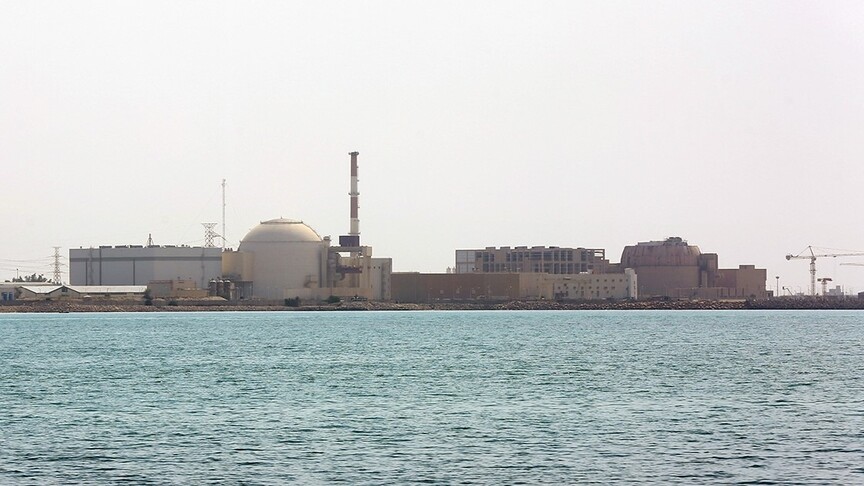
The head of Russia’s state atomic energy corporation Rosatom said on Friday that the construction of the second power unit at Iran’s Bushehr Nuclear Power Plant is resuming gradually.
In remarks to journalists, Alexey Likhachev said the nuclear power plant’s sole power unit continues to operate at 100% capacity.
“The construction site is gradually coming to life. Around 2,200 Iranian contractors have already returned to the site,” Likhachev was quoted as saying by Russian state news agency Tass.
Likhachev said the main work at the site is focused on reinforcing and concreting the second power unit under construction and that the number of Iranian construction workers continues to grow.
He said the situation at the site is generally calm, noting that 20 Rosatom employees remain at the site, while another four remain in the Iranian capital Tehran.
“Regarding the increase in our personnel on site, we are prepared to promptly mobilize and return all Rosatom employees to Iran as soon as we are confident there is no risk of renewed military conflict or threat to the lives and health of our comrades,” he also said.
Likhachev added that Rosatom’s facilities continue to manufacture equipment for the Bushehr plant as planned, with the reactor for the second power unit more than 60% complete, while the steam generators are 50% complete.
“We plan to begin shipping key equipment next year. We continue casting and forging metal blanks for equipment for Unit 3,” he added.
Russia and Iran signed a contract for the construction of the first power unit of the Bushehr Nuclear Power Plant in 1995. In 2011, the plant started operating. In 2014, Russia and Iran signed a contract for the construction of two new reactors at Bushehr.
In March, Russia began evacuating its personnel from the plant due to escalating regional tensions, which started after the US and Israel launched a joint offensive on Iran on Feb. 28, killing over 3,300 people and displacing tens of thousands.
Tehran has retaliated with drone and missile strikes targeting Israel, as well as Jordan, Iraq, and Gulf countries hosting US military assets. Iran has also restricted the movement of ships through the Strait of Hormuz. Efforts to convert the ceasefire reached in early April to a permanent one, however, continue.
