
Japan launched a new regional energy security initiative on Wednesday and pledged around $10 billion in financial cooperation to help Asian countries cope with supply disruptions and rising oil prices linked to the war in the Middle East.
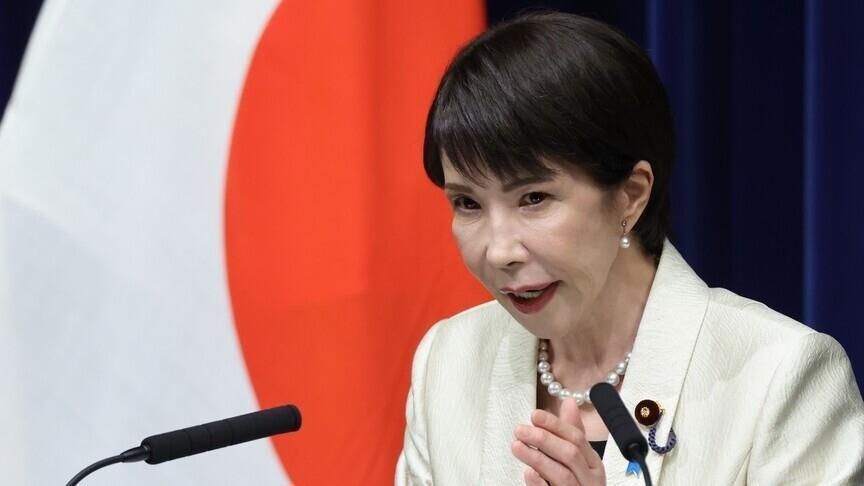
Prime Minister Sanae Takaichi announced the new framework, called the Partnership On Wide Energy and Resources Resilience (POWERR Asia), during an online meeting with leaders from Asian countries and partners of the Asia Zero-Emission Community (AZEC), according to a Japanese Foreign Ministry statement.
Takaichi said Asian countries are among those most heavily affected by disruptions to energy and resource flows passing through the Strait of Hormuz and stressed the need for a coordinated regional response, as the effects are spreading across interconnected supply chains.
Under the new initiative, Japan will provide approximately $10 billion in financial assistance to support the procurement of emergency crude oil and petroleum products, maintain Asian supply chains, and pursue long-term structural measures to improve regional energy resilience.
The Japanese government said the framework will also support the establishment of stockpiling and release systems, construction and use of storage tanks to increase the number of crude oil reserve days in the region, efforts to secure critical minerals, diversification of energy sources such as biofuels, and industrial upgrading through energy-saving measures.
Tokyo said the support amount is equivalent to roughly one year’s worth of crude oil imports for ASEAN if used for crude oil and petroleum product procurement by Asian countries.
Leaders participating in the meeting, including those from the Philippines, Malaysia, Singapore, Thailand, Vietnam, Timor-Leste, Bangladesh, and South Korea, welcomed the new initiative and confirmed cooperation in addressing the current challenges together, the statement said.
Japan said the measures are intended to support the stability of Asian countries while also helping strengthen Japan’s own supply security, including through the procurement of medical supplies from Asia.
It added that the initiative would also help advance the AZEC framework by adding economic and energy resilience to its goals of energy security, economic growth, and decarbonization.
