
İstanbul
- Disputes over Hormuz, nuclear policy and compensation dominate talks
- Officials say Iran will not concede ‘strategic gains’ at negotiating table
Iranian media and officials have framed the collapse of marathon negotiations with the United States in Islamabad as the result of Washington’s “maximalist demands,” highlighting deep divisions over the Strait of Hormuz, nuclear policy and war-related compensation.
The talks, held after a 40-day war and under a fragile two-week ceasefire brokered by Pakistan, ended without an agreement following more than 21 hours of negotiations involving both political and expert-level teams.
Iran’s delegation, led by Parliament Speaker Mohammad Bagher Qalibaf and including Foreign Minister Abbas Araghchi and senior security official Ali Bagheri Kani, engaged in multiple rounds of discussions with a US delegation headed by Vice President J.D. Vance. Despite exchanges of proposals and draft texts, no common framework was reached.
‘Unreasonable US demands’
Iran’s state broadcaster IRIB reported that “unreasonable demands” by the United States prevented progress toward an agreement despite intensive negotiations.
Tasnim News Agency, affiliated with the Islamic Revolutionary Guard Corps, cited informed sources as saying Iran had presented “reasonable proposals,” adding that “the ball is in Washington’s court.”
Fars News Agency, known for its close ties to security institutions, reported that the US side appeared to be seeking a pretext to leave the talks, while Mehr News Agency said the deadlock led to the departure of the American delegation.
An analysis published by IRNA described remarks by US Vice President J.D. Vance as reflecting demands “beyond diplomatic norms,” characterizing them as attempts to impose unilateral conditions.
Hormuz and nuclear file: known fault lines
Although Iranian media did not disclose detailed accounts of the final exchanges in Islamabad, reporting indicates that the main disagreements were consistent with issues raised prior to the talks.
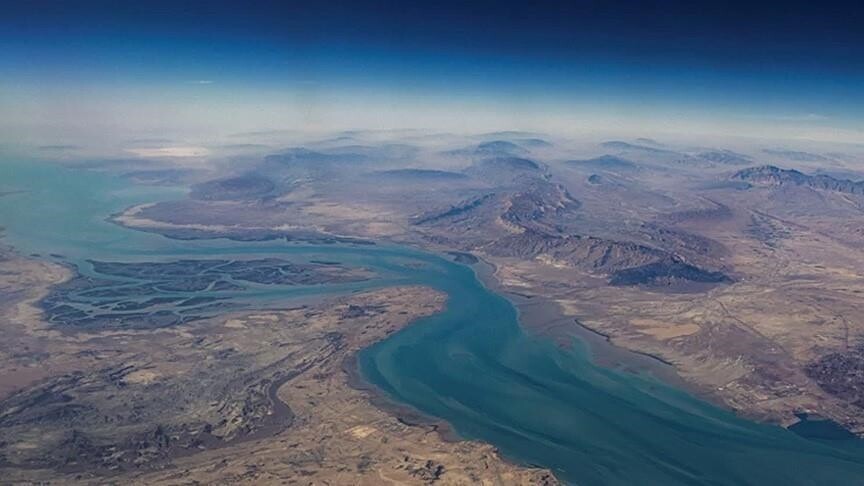
The Strait of Hormuz had already been identified as a central point of contention. Iranian officials repeatedly emphasized before the negotiations that control over the Strait is a strategic matter and not subject to compromise.
Ebrahim Azizi, head of Iran’s Parliamentary National Security Commission, had stated that the Strait would remain under the full control of Iran’s armed forces and would not return to its pre-war management system.
Iranian media also pointed to US expectations regarding maritime access through the Strait — including calls to ensure uninterrupted passage — as a key source of friction that resurfaced during the talks.
A similar pattern was observed regarding Iran’s nuclear program.
While no detailed breakdown of the Islamabad discussions was made public, earlier Iranian media reporting had indicated that the United States was seeking far-reaching concessions, including halting enrichment activities and removing approximately 400 kilograms of uranium enriched to 60% from Iran.
Iranian media framed these demands as unacceptable, emphasizing that Tehran considers enrichment on its own soil a sovereign right. Reports suggested that while Iran may be open to technical adjustments, it rejects both the transfer of its enriched uranium stockpile abroad and a full suspension of nuclear activities.
Taken together, Iranian media narratives suggest that the outcome in Islamabad reflected the reemergence of longstanding disputes over Hormuz and nuclear policy rather than a sudden breakdown.
Compensation and broader demands
Iranian media also highlighted compensation for war damages as a central issue.
The Islamic Consultative Assembly News Agency reported that Tehran considers compensation a core component of any agreement, linking it to accountability for damage caused during US and Israeli attacks.
Sanctions relief and its sequencing also remained unresolved, while the scope of a broader regional ceasefire — including developments in Lebanon — was identified as another key area of disagreement.
Foreign Ministry spokesperson Esmail Baghaei said the talks covered “a wide range of issues,” adding that while some progress had been made, “significant gaps remained on two to three key topics.”
Diplomacy continues alongside ‘strength’
Despite the lack of agreement, Iranian officials emphasized that diplomacy remains part of a broader strategy.
Vice President Mohammad Reza Aref said Tehran will defend its rights “from the Strait of Hormuz to pursuing compensation,” signaling that Iran’s position remains firm.
“From strength in the Strait of Hormuz to pursuing compensation, we stand firm on the rights of the people,” he said.
Qalibaf, who headed the Iranian delegation, said Iran entered the talks with goodwill but that it is now up to Washington to decide whether it can build trust.
“It is now for the United States to decide whether it can earn our trust,” he said, adding that Iran will continue diplomacy alongside efforts to safeguard its national rights.
Uncertain path ahead
While the talks ended without an agreement, Iranian media suggested the process may continue through diplomatic channels.
However, the dominant narrative across Iranian outlets points to persistent disagreements over Hormuz, nuclear policy and compensation, leaving the prospects for a near-term deal uncertain.
For Tehran, the message remains clear: strategic gains achieved during the conflict will not be negotiated away.
